Our Commitment

Sustainability &
The Circular Glass Economy

Why Glass Recycling Matters

Glass is Forever —
Recycle It That Way

Glass is one of the most unique materials on earth — it is 100% recyclable, infinitely, with zero loss of quality or purity. Unlike plastics or paper, glass can go through the recycling loop again and again without ever degrading.

Yet India generates millions of tons of glass waste every year, most of which ends up in landfills — an enormous waste of a permanently recyclable material and a missed opportunity for industry and the environment alike.

Capital Glass Systems is on a mission to change that — by building efficient, scalable, and reliable glass recovery and supply chains that keep glass in productive use, forever.
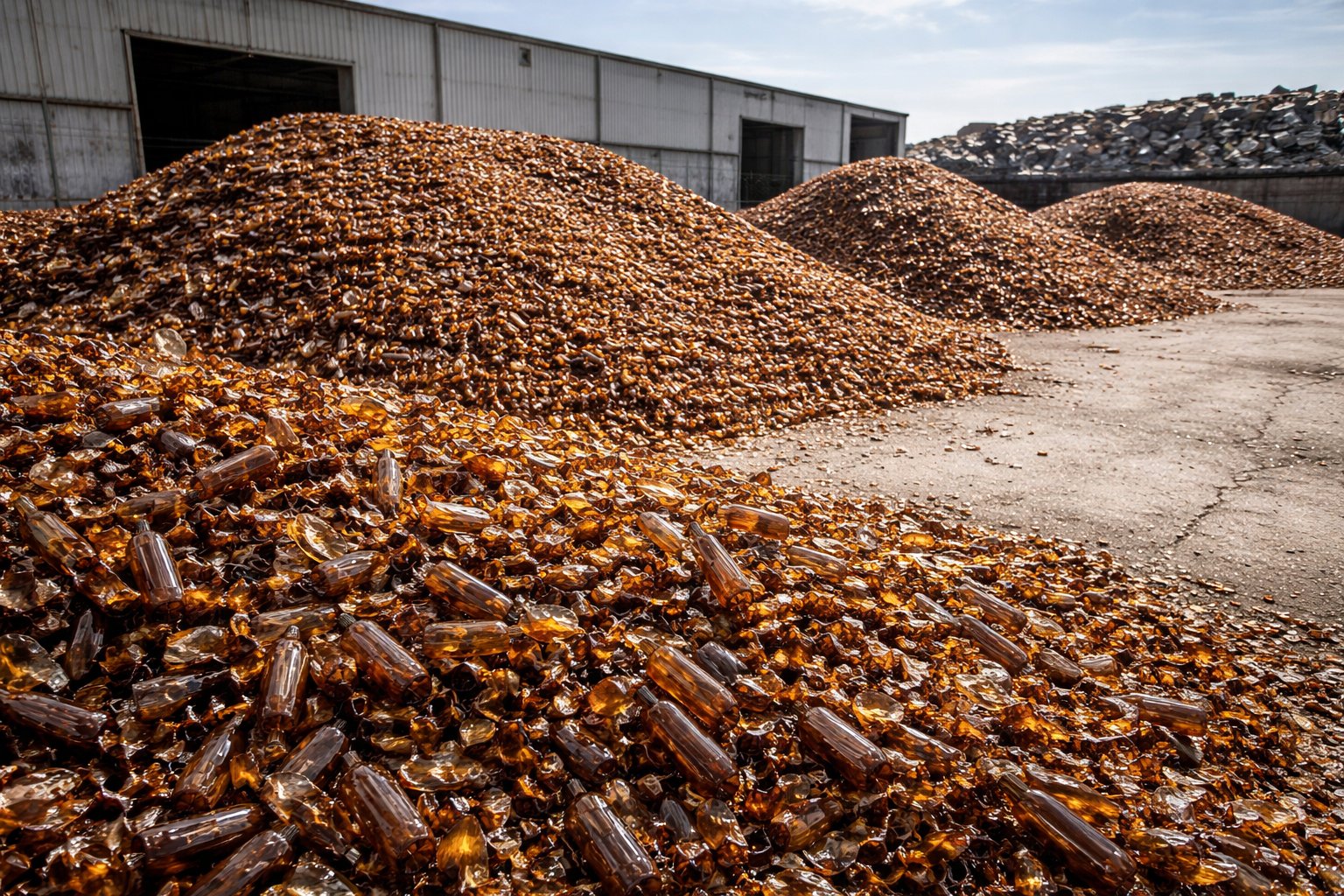
Glass cullet yard
100%
Recyclable
Infinitely
0
Quality loss
per cycle

The 3R Framework

Our Approach to Sustainable Glass

Every operation at Capital Glass Systems is guided by the three pillars of responsible glass management.

Pillar 01♻️

Recycle

We collect post-consumer and post-industrial bottle glass, segregate it rigorously by colour and grade, then process it into premium cullet — ready to re-enter the furnace as a superior raw material that never degrades in quality.

Pillar 02🔄

Reuse

Glass cullet can be melted and reborn endlessly, with zero quality loss. By returning processed cullet to glass manufacturers, we close the loop — ensuring glass stays in active, productive use rather than entering landfills.

Pillar 03🌿

Reduce

Every ton of cullet used displaces virgin raw materials — silica sand, limestone, soda ash — reducing quarrying, conserving water, protecting natural habitats, and reducing the overall industrial footprint on the planet.

How It Works

Our Recycling Process

From collection to dispatch, every step in our process is designed for quality, efficiency, and reliability.

01
🔍

Collection & Sourcing

We maintain a wide network of post-consumer and post-industrial glass sources — from beverage manufacturers, food processors, hospitals, and commercial collection points across the Marathwada region and beyond.

02
🎨

Colour Segregation

Glass is carefully separated by colour — amber, green, and clear/flint — as mixing colours degrades the cullet value for glass manufacturers. Precise segregation is at the heart of our quality commitment.

03
⚙️

Processing & Quality Control

Glass goes through systematic crushing, screening, and contamination removal — removing metals, ceramics, stones, and non-glass materials — to produce cullet that meets manufacturer specifications.

04
📦

Grading & Stockpiling

Processed cullet is graded by size and purity, then stockpiled by grade in our Chikalthana MIDC facility — ready for bulk dispatch at a moment's notice.

05
🚚

Bulk Dispatch & Delivery

Our logistics network ensures 300–500 tons of cullet is dispatched daily to glass manufacturers across India — with consistent schedules, reliable volumes, and professional coordination.

Environmental Benefits

Why Cullet is Good
for the Planet

⛏️

Reduces Mining

Every ton of cullet used displaces raw materials like silica sand, limestone, and soda ash — reducing quarrying, land degradation, and habitat destruction.

💧

Conserves Water

Glass manufacturing with cullet requires significantly less process water compared to virgin raw material-based production — a critical saving in water-stressed regions.

🌡️

Lower Emissions

Cullet melts at lower temperatures than virgin batch materials — meaning less energy input, less combustion, and lower CO₂ emissions per ton of glass produced.

🗑️

Diverts Landfill Waste

Glass in landfills does not decompose. By recovering and recycling it, we divert a permanent pollutant from land — converting waste into a valuable industrial resource.

🔁

Infinite Loop

Unlike most materials, glass never loses recyclability. Each cycle of recycling is as clean as the first — meaning one bottle can become another bottle indefinitely.

🇮🇳

Supporting India's Goals

Our operations directly support India's circular economy and sustainability targets — contributing to national recycling infrastructure and green industrial growth.

"
Capital Glass is now ready to enter a new chapter — with a new vision and a new strategy for recycling glass to save this nature, to save this mother earth, to lower the carbon ratio, to save energy, to save fuel, to save electricity, and to reduce the carbon footprint on this planet.
— Sarabjeet Singh, Director · Capital Glass Systems